Saturday, February 2, 2019

Parenting an Angry Child


    "The truth about rage is that it only dissolves when it is really heard and understood, without reservation."  - Carl Rogers


     Dr. Laura Markham (ahaparenting.com) shares a Game Plan for when your child gets angry:

     Many parents send an angry child to her room to "calm down."  After all, what else can we do?  We certainly can't reason with her when she is furious.  It's no time to teach lessons or ask for an apology.  But if we just send our angry child to his room, he will eventually calm down, but he will also have gotten some clear messages about anger:
     *No one is listening to what's upsetting you.
     *No one is going to help you solve the problem you're experiencing.
     *You're being bad because you feel angry at us.
     *Your anger scares us.
     *When you're angry, the best thing to do is stuff those feelings.

     What can we do instead?   We can help our children learn to manage their anger responsibly.  Most of us have a hard time picturing what that looks like.  Quite simply, responsible anger management begins with accepting our anger -- but refraining from acting on it by lashing out at others.  There's always a way to express what we need without attacking the other person.


     This is one of the most critical tasks of childhood -- learning to tolerate the wounds of everyday life without moving into reactive (Lizard Brain) anger.  People who can do this are able to work things out with others and manage themselves to achieve their goals.  We call them emotionally intelligent.  Children develop emotional intelligence when we teach them that all their feelings are okay, but they always have a choice about how they act.  Here's how to do that.

     When your child gets angry:
1.  Keep yourself from moving into "fight or flight" by taking a few deep breaths and reminding yourself that there's no emergency.  This models emotional regulation and helps your child feel safer, so she doesn't have to fight so hard.

2.  Don't get hooked by rudeness and personal attacks.  She feels hurt and scared and powerless, so she's pulling out the most upsetting thing she can think of, so you'll know how upset she is.  Just say "Ouch!   You must be so upset to say that to me.  Tell me why you're upset.  I'm listening."

3.  Listen.  Try to see it from his point of view.  Often, when people don't feel heard, they escalate.  By contrast, when your child feels understood, he'll begin to feel calmer-- even when he doesn't get his way.


4.  Acknowledge the anger, and the additional emotions underneath it.  The more compassionate you can be, the more likely your child will find his way to the tears and fears under the anger:  "Oh, Sweetie, I'm sorry this is so hard... You're saying I never understand you.... that must feel so terrible and lonely."  (Listen for hurt, sadness, embarrassment, fear and anxiety underneath the anger).

5.  Set whatever limits are necessary to keep everyone safe.  "You're so mad!   You can be as mad as you want, but hitting is not okay, no matter how upset you are.  You can stomp to show me how mad you are."  (Doing something physically active will help release the surge of cortisol rushing through his body.  Stomping, running, push ups, jumping jacks -- rather than simulating punching-- will help disperse the angry energy that has to go somewhere.)

6.  If your child is in full melt down, don't talk except to empathize and reassure her that she is safe.  Don't try to teach, reason or explain.  Just acknowledge how upset she is:  "You are so upset about this.... I'm sorry it is so hard."

7.  Remind yourself that intense anger is nature's way of helping immature brains let off steam.  Children don't have the frontal cortex neural pathways to control themselves as we do.  The best way to help children develop those neural pathways is to offer empathy, while they're angry or upset.  It's ok -- good, actually -- for your child to express those tangled, angry, hurt feelings.  After we support kids through a tantrum, they feel closer to us and more trusting.  They feel less wound-up inside.  They aren't rigid and demanding.


9.  Stay as close as you can.  Your child needs an accepting witness who loves him even when he's angry.  If you need to move away to stay safe, tell him "I'm keeping us both safe, so I'm moving back a bit, but I am right here.  Whenever you are ready for a hug, I'm right here."  If he yells at you to "Go away!" say "You're telling me to go away, so I am moving back, ok?  I won't leave you alone with these scary feelings, but I'm moving back."

10.  Don't try to evaluate whether he is overreacting.  Of course he's over-reacting.  When children get whiny and impossible to please, they usually just need to cry.  (Validate what he is feeling instead of trying to minimize it and the tears may begin to flow.)


11.  After he's calmed down, you can talk.  Resist the urge to lecture.  Tell a story to help him put his big wave of emotion in context.  Most young children want to hear the story of how they got mad and cried, as long as it's a story, not a lecture.   It helps them understand themselves, and makes them feel heard.

12.  Create a teachable moment.  Recognize that part of her wants to make a better choice next time.  Align with that part instead of using shame and blame.  Give her a chance to practice a better solution to her problem:
     "When we get really angry, like you were at your sister, we forget how much we love the other person.  They look like they're our enemy.  Right?   You were so very mad at her.  We all get mad like that and when we are very mad, we feel like hitting someone.  But if we do, later we're sorry that we hurt someone.  We wish we could have used our words.  I wonder what else you could have said or done, instead of hitting and calling names?"

     Gradually, your child will learn to verbalize his feelings and needs without attacking the other person-- even when he is furious.  You will have taught him to manage his emotions.  And you'll have strengthened, rather than eroded, your bond with him.   All by taking a deep breath and staying compassionate in the face of rage.  You won't always be able to pull this off.  But every time you do, you'll be helping your child grow the neural pathways for a more emotionally intelligent brain.


Saturday, January 26, 2019

Four Great Ideas for Raising Empathetic Children


         There are many ways to help children develop an awareness of how others are feeling.  


1.  We can point out the facial expressions and body language exhibited by people to see if a child can pick up on the underlying emotion being portrayed externally.  “Did you see the checkout clerk’s jaw tighten and body stiffen when the cash register drawer wouldn’t open?”   Another fun game is to help your child pay attention to the tone of voice used so they understand the feelings that lie beneath the surface.  “I could hear the hesitation in dad’s voice when he offered to pick us up.  Did you hear the delay in his response or the lack of a strong response when he said ‘Sure’?  How do you think he was feeling?”

  2.  Sibling conflict situations are another great time to ask kids to consider how the other person is feeling.  Dr. Laura Markham (ahaparenting.com) notes that conflict is part of every human relationship, because every relationship has two people with different needs and perspectives. Our job as parents is to teach our children to manage that conflict in ways that bring them closer. What doesn't work is jumping in to decide who is right and who is wrong. Not only are we not teaching our kids to work anything out, but we're inadvertently reinforcing sibling rivalry, by demonstrating support for one child over the other.
     On the other hand, research shows that if we just "let them work it out" without guidance, the more powerful child wins, and we're reinforcing bullying behavior.  But there is a better way, one that teaches lessons your children will use to build healthy relationships for the rest of their lives.

     a. If they're struggling, take a deep breath to calm yourself before you intervene.
     b. Offer empathy to both children by stating their perspective. Say what you see them wanting in
          the situation, or why they're acting as they are (even if you don't agree with them.)
     c. Help each child express their feelings and needs verbally to the other child, without attacking.
    
3.  And yet, one of the best ways to teach children to be empathetic of others is by modeling empathy for them.  Cecilia Hilkey (Happily Family) provides examples in this 5-minute video of how parents can respond with empathy when the child is defiant:  Empathetic Parenting


  4. However, when you notice that things have turned sour and a conflict with your child is escalating, Dr. Markham shares the idea of asking for a “do-over”.   Kids love to pretend. They instinctively use play to heal emotional wounds. And they love the idea that together you can rewrite the script to create a better ending. So Do-Overs can be the perfect way to repair when you're off track. Do-Overs acknowledge that we aren't perfect -- but we're family, and we'll always work things out.

Here's how:
     a. Stop, Drop and Breathe. When you notice you've somehow gotten on the wrong path, just Stop. Drop your agenda, just for a moment. Your goal first is to calm yourself and reconnect. Take a few deep breaths, and say "I'm sorry, I was getting anxious.  Let's have a do-over, ok? What I meant to say was......"

     b. If you were a less than stellar role model in the anger management department, you'll have to apologize before suggesting the Do-Over. Don't worry, your child won't lose respect for you. He'll see that maturity means not being perfect, but being willing to take responsibility, make amends and try again. (How (and When) To Apologize To Your Child)

     c. Reconnect with a big hug before you suggest the Do Over. She needs to know you still love her before she's ready for play. And remember that many children need to discharge a little emotion before they're ready for a Do-Over, so she might burst into tears either when you apologize, or even a few hours later. She's not only letting go of her anger, but the fear of losing you that was triggered by your conflict.

     d. It's ok not to be perfect, but if you find yourself apologizing to your child frequently, that's a red flag to get some more help with your parenting.

     e. Agree on a family signal that your children can use if you don't notice your voice getting louder. My daughter would interject "Mom, is it time for a do-over?"  whenever I started to get upset. Before long, she began using it as a way to regulate her own emotions or heal a rift between us.

     f. Don't be surprised if your kids start asking for Do-Overs when they've drawn your ire. Be generous and always let them start again. You want them practicing their best selves; it trains the subconscious to produce that good behavior as the default.

     So next time you find yourself in the middle of an emotional train wreck with your kids, try a family Do-Over to practice using a more empathetic response. You'll find you can always rewrite the script for a happier ending.                                                                                                                     

Sunday, January 20, 2019

Differences Do Matter.... and Talking about them helps us Raise Compassionate Kids


     This week, NES students are focusing on having empathy and showing compassion for others.  Shauna Tominey, author of Creating Compassionate Kids; Essential Conversations to Have with Young Children, writes to parents and caregivers:

     Coming from a multicultural family, I grew up in a household where multiple cultures were celebrated and multiple languages were spoken.  I was taught that differences don't matter.  I heard this same message echoed in our predominantly white community, so I believed it. 

     The first real conversation I can remember having about race was in high school.  Our sociology teacher asked us each to write down a list of words that defined how we saw ourselves.  Our teacher later shared that every year, the one or two African-American students in his classes always wrote the word “Black” first.  So why was it that none of us wrote down the word, “White?” After graduating from high school and moving around the country, I quickly realized that the idea that differences don’t matter just isn’t true.  Differences do matter.  They matter a lot.

  When we teach children that differences don't matter, we do it with the best of intentions. Without intending to, however, we may be ignoring that there are children and families whose lives are defined every day by their differences. We can all point to an example of how we (or our children) feel different or don't fit in. Sometimes this helps us practice empathy. Sometimes it leads us to overlook the fact that the way differences impact our lives is not equal.

Rather than teaching children that differences don't matter, what if we teach children that differences shouldn't matter, but that they do? As we celebrate Martin Luther King, Jr. Day, let's consider how we can help children learn to recognize the similarities with others, acknowledging the struggles we have with differences in our society, and learn to celebrate these differences.

Try these strategies with the children in your life:


1. Talk about the qualities that make us and others who we are. Help children learn about who they are and who they will become. Teaching children self-awareness often begins with conversations that focus on qualities that we can see in our children or expect our children to develop, but these conversations can't end here. We can also help children learn about qualities that others have too so that they can develop a greater understanding for people who are similar to or different from themselves. Draw self-portraits with your child. Look at pictures of yourselves or into a mirror as you draw. talk about the different colors you see and try to match your skin, hair, and eye color in your artwork.

2. Focus on shared feelings. Help children focus on the fact that we all have feelings as a way to build empathy. Ask questions like, "How do you think s/he is feeling?' or thing out loud, "I wonder how they are feeling?" Ask about different feelings that your child has during the day. Taking your child's feelings seriously will help them learn to do the same for others.

3. Teach children that differences do matter. Talk with children about the fact that people sometimes look at or treat others differently because of the color of their skin, how they look, how they talk, how they move, or for other reasons. Let your child know that this is never okay (unless someone needs a special accommodation that is helpful for them). Brainstorm together ideas for what to do if and when you see this happening at school or in the community.

4. Use storybooks to highlight diverse experiences and role models. Read many different books with your child that include diverse characters. Find role models in story books that are similar to and different from your child. Do a book scavenger hunt. Try to find books that have different types of people and families in them. Talk about the types of families that were easiest to find in books, and the types of families that were the most difficult to find. Ask your child, "How do you think it feels to families who cannot find books showing families that are similar to their own?"

5. Strive to learn more and be inclusive within your own community. Serve as a positive role model for the children in your life by showing interest in learning more about other individuals and families. Participate in community cultural events and get to know other families in your community. Tell your child stories about how you learned about your own family culture when you were young.

Too often, individuals and families from non-dominant groups carry the responsibility to educate others, to explain themselves, or even to defend themselves. If we actively teach our children to value themselves and others for our similarities and differences, we can share this responsibility as we strive to create an increasingly compassionate community for all children.

*************************************************************************************************************************


Here are some books to read with your children which offer ideas about how to create a fair and just world for everyone:
§  Based on the true account of the life of astronaut Ron McNair, Ron’s Big Mission by Rose Blue and Corinne J. Naden finds a young Ron discriminated against because of his skin color at the library when he wants to check out a book.
§  In A Taste of Colored Water, author Matt Faulkner teaches a civil rights lesson from the historical example of segregation at the water fountain.
§  Use Sit-In: How Four Friends Stood Up by Sitting Down by Andrea Davis Pinkney to help students find out what fairness issues they might consider resolving with a peaceful protest.
§  Looking after Louis by Lesley Ely finds Louis, a child with autism, getting extra recess. Will his friend understand that it’s fair because it’s what he needed when he needed it?

A few more strong titles include:
§  It’s Not Fair! by Amy Krouse Rosenthal
§  Mine! by Kevin Luthardt
§  Not Fair, Won’t Share by Sue Graves
§  Rotten and Rascal: The Two Terrible Pterosaur Twins by Paul Geraghty
§  Share with Brother by Steven Layne
§  Squirrel’s New Year’s Resolution by Pat Miller


Friday, January 11, 2019

10 Easy Ways to Improve Your Parenting, No Resolutions Necessary

Happy 2019!   Dr. Laura Markham, from ahaparenting.com, offers this wonderful list of New Years Reminders that will strengthen your relationship with your child:

Tired of resolutions? Here are 10 Easy Ways To Improve Your Parenting, No Resolutions Necessary. Put these on your fridge and read them daily. I guarantee you less drama and more love.
1. Empathize more. Children don't always need to get their way, but they do need to feel understood. Isn't that what we all need? Whatever your child says or does, she has a reason. Even while setting limits, try acknowledging that reason. Instead of "Stop pushing him!" try "You want your brother to move so you can reach the truck. Say 'Move Please.'" 
2. Tell them what they CAN do, instead of what they can't. Instead of "Stop playing with the ball in the house!" try "Balls are for outside. Inside, you can throw the stuffed animals into the bathtub." 
3. Get them laughing every day. Laughter changes the body chemistry, decreasing stress hormones so kids are more cooperative and sleep better. It also increases bonding hormones, so when you laugh with someone, you strengthen your relationship. 
4. Say Yes more often. We're parents, so we have to set limits and say No, over and over all day long. So when you can say yes, say it. Even when you have to say no, can you say it with "Yes" energy? "YES, it's time to clean up, and YES I will help you and YES we can leave your tower up and YES you can growl about it and YES if we hurry we can read an extra story and YES we can make this fun and YES I adore you and YES how did I get so lucky to be your parent? YES!" 
5. Spend "special time" every day with each child. If you want to strengthen and sweeten your relationship with your child, here's your prescription. Just show up and pour your love into your child without controlling him. Parents often tell me that their children react to getting this one-on-one time "like they were missing an essential vitamin." They were. Every child needs this tangible expression of your love. 
6. Use your pause button to yell less. How will they learn to regulate their emotions if we don't regulate ours? You're the role model. 
7. Turn your screen off when you're with your child.  Many children say their parents' phone is the most important thing in the parent's life. They'll remember for the rest of your life that you turned your phone off when you were with them. 
8. Go outside and move with your kids.  Research confirms what your grandmother said. Children really do need daily fresh air, greenery and movement to de-stress and be their best selves. 
9. Allow emotions, limit behavior.  Of course you need to set limits. But when we allow emotions, children learn to manage them faster. Just say "You must be so upset to use that tone of voice. Tell me about it, Sweetie. We can figure this out together." Your child will start calming down before your eyes. 
10. Put yourself back on the list. You can only be emotionally generous if you take care of you. I know, that's tough, but it isn't sustainable to leave yourself off the list. Start by getting enough sleep and talking to yourself like someone you love. Monitor your well-being as you go through your day. Every day, do something that increases your level of joy. You'll see your good mood rub off on your child.
Happy New Year! I hope 2019 is your family's best year yet.

Friday, January 4, 2019

It's not just WHAT you say, but HOW you say it.


      Welcome back to a new year!  In 2019, students at Nederland Elementary School will be practicing social skills like empathy, kindness, compassion, teamwork, assertiveness, reflective listening, and conflict resolution. This week we are noticing nonverbal communication and how it impacts a conversation.  

     It is said that up to 93% of what is communicated is nonverbal in nature.  When we mindfully notice the underlying emotions and thoughts being conveyed in social situations, we can more accurately respond.   It is easy to miss these messages if we don’t practice observing and interpreting nonverbal cues as a child. 

     Here are some Understood.org strategies for helping your child understand It Isn’t just What You Say, but How You Say It that can make all the difference in relationships.  

  
     1.  Encourage your child to listen to the tone and pitch of people’s voices.  See if they can identify    whether the tone is positive, neutral, or negative.   Practice with changing your tone with simple phrases like this:   “Good morning, your breakfast is ready.”  “Thanks a lot for your help” or  “What do you need?”

      2.  Talk about Attitude.  Explain that tone of voice + body language + words = attitude.  Help your child  mindfully notice nonverbal social cues:  “Do you see how Johnny is crossing his arms and scowling as he says everything is fine?”  See if your child can figure out what someone is thinking and feeling by attending to their facial expressions, body language, and tone of voice rather than just taking their words at face value.  


3.               3. Point out inflection.   Teach your child that the meaning of words change with emphasis, volume and speed of speech.  For example, a calm “Where are you going?” is a curious question. A loud, quick “Where are you going?” sounds sarcastic or angry.


4. Practice with nonsense words.  Without having meaningful words to consider, your child can focus on just vocal sounds.  Practice inflection, volume and speed by saying things like “bibbidi bobbidi boo.” Ask your child to say it as a question, as a statement, and as a demand.  Then add emotion to it.  (For example, an “angry question.”)


     Primary students are noticing facial expressions and trying to connect them with an expanded emotions vocabulary.  Our eyebrows, eyes, cheeks, and mouth all change as we display different emotions.  Body language that conveys tension or openness, hopelessness or joy are all on display for children to identify.  Children are learning to “read people” as well as literature. 

      Secondary students are also learning about tone of voice and how it illuminates hidden thoughts and feelings.  An astute mindful observer can learn to read these social cues and know how best to respond in social situations rather than just relying on the words spoken.  

      For more helpful tips about communicating with your family, please join the next Mountain Strong Families series on Tuesday, February 12th from 5:30 -7:30pm at Nederland Elementary.  Three local counselors will explore nonverbal communication, assertive statements and reflective listening skills in The Art of Communicating with your Family.

Sunday, December 16, 2018

Giving an Abundance of Presence over Winter Break


     A teacher by the name of Murphy Moroney shares this insight with parents as we approach the season of giving:

     "I know at this time of year there is pressure to create a perfect, magical Christmas.  I know that you want to give your children the magic of Santa and ensure he brings the best gifts... but I'm writing to tell you a secret... every January when your child comes back to school, they tell me all about the Christmas holidays.  They tell me about the days when everyone stayed indoors and watched TV together.  They tell me about walking in the freezing cold to get McDonald's.  They tell me about staying at Grandma's and being excited when you came back from work.  They tell me about how you let them snuggle in your bed.  They tell me about how you played cards and took them swimming one day and forgot their towel.  They tell me about a visit to a friend's on New Year's Eve and how they stayed up to midnight.  They tell me about how they loved staying in their PJs some days and taking a trip out another day.  They mention their gifts, but for them Christmas is your love and time and routines and feeling safe.  You are their favorite things!"


     Unfortunately, many of our national holidays in their present form bring as much stress and sadness to families as they do joy and connectedness.  The holidays aren't just stressful for adults, they are actually stressful for children too.  Teachers feel the children's frenzy building by Halloween and continuing to consume them until winter break rolls around -- rippling into the classroom, spilling out onto the recess ground.  One reason this happens is because holidays are so heavily influenced by commercial interests which equate celebrating with buying and acquiring loot.  Children depend on us adults to both regulate their environment, and to help them regulate their moods.  This aptly applies to our holiday celebrations.


     Julie Bisson, author of  Celebrate!, believes the overemphasis on buying things at this time of year minimizes the real message of holidays and focuses instead on what to purchase to make one's family happier.  This emphasis puts unnecessary pressure on families with limited financial resources and can make children whose holiday celebrations feature fewer things feel inferior.  Psychologists remind us that the real cause of happiness is found in strong relationships and in believing your life has meaning.  

     Here are some strategies that Bisson offers to counter commercialism while promoting family connection and deep meaning:

1.  Talk with children about the underlying meaning behind whatever holiday you celebrate. 
     Tell them a little about the historical story of the holiday.  Find a good book that tells this message  and read it together by candlelight.

2.  Explain the symbolism behind the decorations children see around them -- mistletoe, advent wreaths and candles, Los Posadas processionals through the streets, menorahs, nativity scenes, and yule logs.

3.  Foster empathy and compassion in children by reminding them that holidays are a time for thinking of others.    Provide opportunities for children to create homemade gifts for people they love or people in need.

4.  Counter the message that having more means being valued more.  The media has does a good job of reinforcing the story that Santa only brings presents to good children.  Sadly, this damaging story can lead children to think they are bad if they receive few or no presents.

5.  Visit a place of worship that is celebrating a holiday you are unfamiliar with.  Help your child learn about the rich and varied religious traditions that make up our community.  How do Catholic, Protestant, or Greek Orthodox families celebrate Christmas?   How will Jewish families celebrate Hanukkah?  Are there groups gathering to bring in the Winter Solstice together?  Will Latino families in Boulder march through the streets for Las Posadas?   These magical, mysterious, awe-inspiring celebrations help ground children in the deeper meaning of the holidays and teach them how other children and families celebrate light, hope, and joy.


     What children want most over winter break is an abundance of your presence.  One simple way to grant this wish is shared by Rachel Stafford:  Set this simple limit to expand connection   Stafford's simple gesture may bring tears to your eyes as you reflect upon moments you do not want to lose with your child.

     May your home be filled with your loving Presence and with meaningful family traditions which become the memories tucked away in your child's heart.


Sunday, December 9, 2018

What Would You Give your Children if You Could Give them Anything?


     Jenny Woo, Founder of Mind Brain Parenting, wonders “What are the most life-defining pieces of wisdom and memories that I could leave with my children and be in peace knowing that I have prepared them for life?”

     Woo writes: My research in early childhood at the Harvard Graduate School of Education and my former experience coaching thousands of adults in companies and schools led me to advocate for the importance of social and emotional development. Whether it’s coaching a high-potential vice president of a Fortune 500 company or developing a recent college graduate, I noticed that the most detrimental barriers that prevented them from realizing their potentials were their lack of self-awareness, self-management, and relationship skills. I am not alone. Eight in ten employers identify social and emotional skills as the most important to success yet also the hardest skills to find.1

     Many of the seemingly “well-put-together” executives and parents I had coached looked perfect and well-rounded on paper. They were in a branded career, went to an excellent university, and had several extracurricular talents. Yet, as the executive educator, Marshall Goldsmith had famously coined: “what got you here won’t get you there.”2 I saw some of the best and brightest struggle to get promoted to the big role at work or to reinvent themselves in life. It wasn’t that they lacked knowledge or capabilities. It was that their emotions and egos got in the way.

     Academic success does not equate to life success. To be prepared for life, we need a much broader understanding of our internal (self-awareness) and external worlds (social-awareness).  

     Here are three practices that we could do today that will prepare our children for life:

1.     Embrace failure
What does the little voice in your head say when you make a mistake? How do you respond when your child comes home with a bad grade on a test? Research shows that how parents perceive and react to failure predicted their children’s view of failure.3 Imagine, even if you had the best intention of supporting your child’s growth, when you regularly blow up when your child makes a mistake or mishap, you could be inadvertently giving off the signal that mistakes are the end of the world. In the workplace, I’ve seen clients who, despite ample resources and support, struggled to make the next career leap because their fear of failure stood in their ways — imposing self-saboteurs — that were mentally and at times, physically debilitating.

     2.  Ask for Help
All too often, I see children fail a class or employees fired at work because they remained silent for too long, either because they were too embarrassed to ask for help or they didn’t know that asking for help was an option. People who “made it” in life are more often than not portrayed as those who overcame the adversities of life through sheer grit. As a result, asking for help can be seen as a sign of weakness. In reality, it’s about recognizing your strengths and needs, and in response, utilizing available resources accordingly. Practice asking for help in front of your child. Show your child that asking for help is a responsible thing to do, just like giving help to others when you can.

3.  Share Power
Allow others, especially your child, to have a seat at the table, literally and figuratively. Value the voice and opinions of your child. Parents and children fight when there is a perceived imbalance of power dominance, in which case, feelings are hurt and harsh words are exchanged. Sharing power starts with mutual respect. Show your child how to share power and make collaborative decisions with others.  Give children several attractive choices even when you are setting limits with them.

Want help with more actionable conversations that prepare children (and adults) for life?  
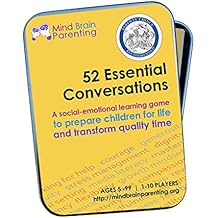
     Check out 2018 Parents’ Choice Award winner, 52 Essential Conversations, 
a social and emotional skills building game available on Amazon 
 (http://amazon.com/dp/B07FKSQV47) and Mind Brain Parenting (http://mindbrainparenting.org) created by Jenny Woo.

52 Essential Conversations: The Life Skills Card Game for Age 5 to Adults - Builds Social Emotional, Critical Thinking, Growth Mindset & Vocabulary Skills - Created by Harvard Educators