Monday, August 19, 2019
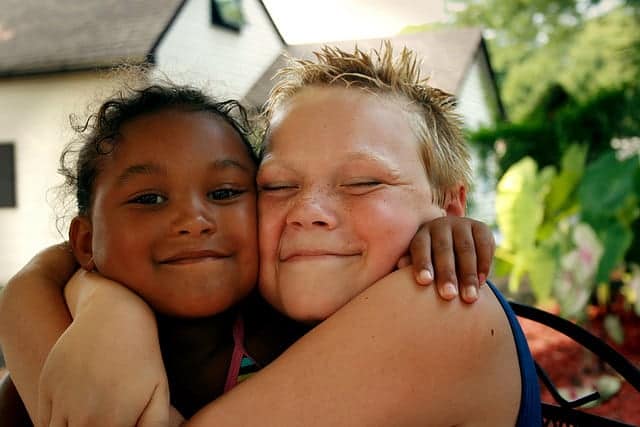
Teaching Children to Value Differences
This week, students at Nederland Elementary are learning about three critical social-emotional skills: identifying their own unique identities and preferences, finding commonalities with others who appear to be different from themselves, and learning how to respond with respect and curious questions to understand people who differ from them.
As parents, there are concrete ways we can help our children learn to know and value who they are AND know how to interact respectfully with the diversity of humanity around them. Chris Corsi, health educator for poehealth.org, reminds parents that "children's curiosity knows no bounds. Sometimes the questions they ask about others portray falsehoods that kids may have already begun to internalize. Children often have questions when they encounter people they see as different from themselves. This is perfectly natural, and it creates an opportunity to engage kids in important conversations to help them actively choose to be inclusive of people who (at first) seem unlike them."
Tiffany Jana, How to Talk About Diversity with your Kids, offers these suggestions as children begin to notice differences between themselves and others --
1. Start the Conversation When Children Start Noticing or Experiencing Difference. It could be a comment they make or your recognizing your youngster taking particular notice of another person who is a different race or speaks a different language. Let your child know that you are willing to talk with them about these new things, i.e. "Yep, that woman in the wheel chair is dressed in brighter colors than others around her." or "You're right, that boy has a beautiful warm brown tone of skin."
2. Use Media to Your Advantage. Instead of watching and reading the status quo books and shows, branch out with your child. Head to your local library and seek out books with diverse main characters who are different from your child. Just read several of these books together and let the conversation be organic.
3. Your Child May Notice Someone Who is Different Treated Poorly. Talk with your child about the appropriate behavior and values you want them to exhibit in that situation. Make it clear that it's unacceptable to use slurs, to use identity as an insult, or to treat somebody worse because they are different.
4. Actions Speak Louder Than Words. Monitor your own behavior by treating a stranger that doesn't look like you with the same respect as the stranger who does look like you. Your actions will go a long way toward teaching children about the world you would like them to grow up in and their expected behavior in it.
Corsi offers additional tips to help us accept and value differences --
1. Challenge the idea of "normal". Generally, people are treated differently because they are seen as "the other." For children, anything outside of "normal" may seem undesirable. It is helpful to challenge the idea of "normal" to see past differences. All of us are born unique with different likes and group identities, so there is no one way to be "normal."
Child: "That person sounds so weird!"
Adult: "Well, they have an accent. They might originally be from somewhere else. That doesn't make them weird -- just different, and different isn't bad."
By acknowledging differences and similarities simultaneously, kids will find they can learn from people who aren't like them.
2. Teach children to not be afraid to ask curious questions. It can be embarrassing to hear your child ask questions about "different" people, but questions often come from a place of innocent curiosity. If you are unsure about how to answer their question, try: 'I need to think about your question and talk to you later.' Children's questions and comments are a way for them to gather information about aspects of their identity and usually do not stem from bias or prejudice.
3. Cultivate empathy and community. It can be hard for kids to see themselves in people who are different, which is why it's important to encourage children to empathize and help them get to know people unlike themselves. One of the best ways to improve intergroup relations is simply interpersonal contact. Getting to know people different from oneself leads to reduced prejudice and increased understanding.
And finally, thepositivemom.com offers ways to help children LOVE OUR DIFFERENCES and appreciate what others bring to our lives --
1. Teach children to love their bodies. Accepting others starts with accepting ourselves. Teach your child to embrace their body and develop a great relationship with it, not making it a target for self-defeat and criticism. The fundamental principal is to make clear that the way one looks is not and should not be the yardstick with which they measure their self-worth.
2. Teach children to love variety. We differ in appearance, culture, religious beliefs, political views, nationality, gender, marital status, educational level, and in little things like "favorite color." Teach your child to love and embrace others who are different by explaining how they make the world better and how it would be boring without them.
3. Teach children to find common ground. Explaining how we are different is not enough. We must all put an effort into finding similarities that will help us connect with others whose attributes weren't instantly attractive to us. Focusing on how we are "the same" speeds up the process of accepting others. Talk about the basic human needs we all share and are trying to meet.
4. Teach children "The Work". The Work of Byron Katie is summed up in a rhyme: Judge your neighbor, Write it down, Ask four questions, Turn it around. This is a helpful tool to help us change our perception with regard to others' behaviors:
~We catch ourselves having a judgmental thought about another person, which causes us pain, separation and/or suffering.
~We write it down, then ask the questions:
a. Is it true?
b. Can you absolutely know that it's true?
c. How do you react, what happens, when you believe that thought?
d. Who would you be without that thought?
~We turn the thought around, which helps us ground and humble ourselves with the real truth.
These are just a few ways to begin teaching young people how to love themselves and others, and to accept and value others for their differences. Ultimately, the goal is to create a more compassionate culture for current and future generations. We parents hold this possibility for a more compassionate future for our children in our hands.
Tuesday, August 6, 2019
Back to School is always a BIG transition
(Excerpts borrowed from ahaparenting.com)
Kids who are starting
school for the first time or moving to a new school have to cope with the
biggest adjustment, but even moving up a grade means facing more academic
demands, a new teacher, and a changing social circle. The good news is that a
little bit of preparation and forethought can make those first weeks of school
easier for your kids – and yourself.
1. Make sure your child is familiar with the
school.
If she was at the same school last year, you only need to talk about any differences
this year.
·
“Now
that you’re in first grade, you get to play on the big kids playground, and go
eat in the lunchroom with the other kids.”
·
“Now
that you’ll be in third grade, you’ll have homework every day.”
·
“Now
that you’ll be in middle school, you’ll be walking by yourself.”
But if this is her first
year at this school, then you’ll want to take some trips there. Even if there
is a formal orientation day just before school begins, start now by taking a
trip to the school. If you can get access to the playground, that’s a terrific
way to help your child bond with her new school. If not, at least admire it
through the fence and get her excited about the slide or climbing structure. The more your child sees of the school, the
less she’ll fret with fear of the unknown, and the more comfortable she’ll feel
on the first day. Come by to meet the
new teacher for a few minutes before school starts. SUPPLY DROP OFF DAY is Tuesday, August 13th from
2:30 -3:30pm at NES.
2. Facilitate your child’s bonding with the teacher.
All kids need to feel
connected to their teacher to feel comfortable in the classroom. Until they do,
they are not ready to learn. Experienced teachers know this, and “collect” their
students emotionally at the start of the school year. Obviously, if you can
arrange for your child to meet the teacher in advance, by all means do so. But
there are lots of ways to help your child feel like he knows even a teacher
he’s never met.
Once you find out your
child’s classroom assignment, begin talking about the teacher in fond and
familiar terms.
If you know other kids
who have been in Ms. Williams’ class, ask them to tell your child what their
favorite thing was about her.
If you notice in the
first week of school that your child doesn’t seem to have connected with his
teacher, don’t hesitate to immediately contact her. Just explain that your
child was excited before school started but doesn’t seem to have settled in
yet. You’re hoping that the teacher can make a special effort to reach out to
him so he connects with her and feels at home.
3. Facilitate bonding with the other kids.
Kids are always
nervous about their new teacher, but if they know any of the other kids,
they’ll feel more at ease. If you’re new in town, make a special effort to meet
other kids in the neighborhood.
If you can arrange for your son or daughter to
travel to school that first morning with a child he or she knows, even if they
aren’t in the same classroom, it will ease last minute jitters.
***Remember to bring the whole family for a picnic at Back to School Night at NES on August 22nd from 5:30 -7:30 pm. Meet the teacher, your child's playmates and their parents.
4. Practice saying goodbye.
For many children, the
biggest challenge will be saying goodbye to you. Orchestrate small separations
to practice saying goodbye, and develop a parting routine, such as a hug and a
saying like
“I love you, you love me, have a great day and
I’ll see you at 3!”
You might give your
child a token to hold on to that reminds her of you, such as a cut-out heart with
a love note, your scarf, or a small stone you found on the beach together, that
she can keep in her pocket while you’re apart and give back upon your return.
Most kids like to have a picture of the family in their backpacks. Be sure to
use the suggestions above for helping her bond with her new teacher; she needs
to transfer her attachment focus from you to the teacher if she is to successfully
let you go.
5. Create a consistent goodbye ritual and story
about her day.
If you suspect that
your child might have a hard time saying goodbye, by all means speak with the
teacher now and make a plan for how to handle the first day. Maybe every
morning you will read your child one story and then take her over to the
teacher when you say goodbye, so the teacher can comfort and distract her.
Once you have a plan,
begin describing to your child what will happen at school. But don’t emphasize
the goodbye, keep right on going with how fun the day will be:
“Every morning you will pick a book for me to
read to you. When we finish the story, we will find Ms. Williams together.
We’ll give each other a big hug and say our special goodbye. Then Ms. Williams
will hold your hand and take you while I go to work. You will have snack, and
play outside, and read stories, and have lunch. Every day when I pick you up I
will be excited to hear who you played with that day.”
6. Start conversations about the next grade at
school or about beginning school.
One good way to do
this is to select books relating to that grade. Your librarian can be helpful;
some good choices include books by Alan & Janet Ahlberg, Stan & Jan
Berenstain, Dianne Blomberg, Marc Brown, Lauren Child, Julie Danneberg, Bonnie
Graves, James Howe, Beth Norling, Marisabina Russo, and Amy Schwartz.
Get your kids excited
by talking about what they can expect, including snack, playground, reading,
computers, singing and art. If you know other children who will be in his class
or in the school, be sure to mention that he will see or play with them. Share
your own stories about things you loved about school.
Encourage her
questions by asking what she thinks school will be like. That will help her to
express any fears she hasn't articulated, but that are making her nervous.
Emphasize the things you think she’ll enjoy but be sure not to minimize her
fears; kids can be stricken by worries that adults might find silly, like finding
the bathroom at school. Normalize any fears and reassure her that she will have
fun, that the school can reach you if necessary, and that your love is always
with her even when you aren’t. Be sure to end every conversation with “and when
school is over I will be there to pick you up and we’ll have a special snack
while you tell me all about your day” so that every time your child thinks
about school, she remembers this reassurance.
7. If a younger sibling will be at home with
you
If a younger sibling will
be at home with you, be sure your child knows how boring it will be at home and
how jealous you and the younger sibling are that you don’t get to go to school
like a big kid. Explain that every day after school you will have special time
with your big girl to hear all about her day and have a snack together.
8. Get your kids back on an early to bed
schedule well before school starts.
Children need 9 1/2 to
11 hours of sleep a night, depending on their age and individual physiology.
(Teens need a minimum of 9.5 hours; toddlers usually do best with 11 hours).
Getting kids back on schedule so they’re sound asleep by 9pm, so they can wake
by themselves at 7am for school takes a couple of weeks of gradually moving the
bedtime earlier.
9. Let your child choose his own school
supplies...
...whether from around
your house or from the store, and ready them in his backpack or bag.
10. If your child gets teary when you
say goodbye
If your child gets
teary when you say goodbye, reassure her that she will be fine and that you
can’t wait to see her at the end of the day. Use the goodbye routine you’ve
practiced, and then hand her off to her teacher. Don’t leave her adrift without
a new attachment person, but once you’ve put her in good hands, don’t worry.
Experienced teachers know about first day jitters and are used to bonding with
their charges. Her tears won’t last long. If your child continues to have a
hard time separating, be sure to speak with the teacher. Maybe she can give her
a special job every morning or facilitate a friendship with another child who
has similar interests.
11. Make sure you’re a few minutes early to
pick your child up that first week of school.
Not seeing you
immediately will exacerbate any anxieties he has and may panic him altogether.
If your child cries when you pick him up, don’t worry. You’re seeing the stress
of his having to keep it together all day and be a big boy. Your return signals
that it’s safe to be his baby self again, take it as a compliment.
This is true for kids
of all ages, who may have uncharacteristic meltdowns during the first week of
school, or just before school starts. Chalk it up to stress, don’t be hard on
them, and be sure you’re there to talk so they don’t have to resort to
tantrums. Before you know it everyone will be comfortable in their new routine
and not even looking back as they race into school.
Happy School Days!!
Thursday, May 16, 2019
Transitioning from School to a Meaningful Summer!
"Often when you think you're at the end of something,
you're at the beginning of something else."
~ Fred Rogers
It's that time of year -- a time for learning to say healthy goodbyes to friends and teachers, acknowledging a mixture of emotions, reflecting on what we learned individually and as a community, and preparing for a new schedule as summer unfolds. We know that transitions of all kinds can create more instability and agitation in children. These are times when we adults need to pay particular attention to the social and emotional well-being of our kids. As we help our kids bring meaningful closure to their school year, we can also transition them into a summer routine that feels grounding. Here are a few suggestions from Rebecca Eanes of Positive-Parenting.org:
a. Whether your family's schedule is jammed packed this summer or purposefully slow and relaxed, the main ingredient to remember for a wonderful summer is connection. Being present and engaged with your children is going to fill their cup, and the joyful memories you make together will feel that much more special to them because they feel so very loved and connected to you. There are countless ways to connect, and it’s useful to know your child’s love language so that you can really speak directly to their hearts. Here are some ideas: Offer lots of hugs and cuddles. Make up a special secret handshake. Give lots of verbal affirmations. Write notes, cards, or letters to them. Read aloud. Play together. Send them mail. Commit to at least 30 minutes per day to give your child distraction-free attention and watch the relationship blossom.
b. Read great books together. Reading aloud provides key benefits that prepare children for reading and learning. The greatest amount of brain growth occurs between birth and age 5, but older kids benefit, too! My family loves piling in the car together (or on the couch) and listening to audiobooks. Even if you don’t take any trips this summer, your children can visit all sorts of places and live through many characters with books. Encourage your child to start a series and set aside reading time daily. It helps to create a special reading nook with pillows, blankets, and lights! There are tons of reading lists online to give you some ideas! Try readingrockets.org for lists divided by ages.
c. Pick one epic thing you’ve never done before. Have you ever camped out in the backyard? Have you gone to the zoo? Have you hiked all the trails in your area? Pick one thing that will make you child say, “Oh, that was the summer we…” This defining moment will make this summer stick out in their minds as one of the best ever. Need some ideas? Visit a nearby waterfall. Try out a trampoline park. Give ice skating a whirl. Host an incredible sleepover. Find a local carnival or festival. Search for free outdoor concerts. Watch a drive-in movie.
d. Don’t throw away your routines. Sure, you can adjust for summer and be a little more lax, but if the routines just disappear completely, you may see more meltdowns out of your kids. Dr. Laura Markham of ahaparenting.com says that routines give children a sense of security and help them learn self-discipline. Setting up a good summer routine will help you and your child feel more structured and allows you have a little more control over the chaos of summer break.
Wishing you and your family a precious summer!
Thursday, May 9, 2019
How to Be a Happier Mom
Happy You, Happy Family.com offers these helpful reminders for Mother's Day:
Above all, remember that even the happiest moms have unhappy moments. When you’re feeling a little off or even if you’re teetering on the brink of losing your temper, try these science-backed tricks to get back on track.
Some days you might need one of these quick solutions, and other days you might need a handful to find your happy again.

1. Label Your Feeling
Use a word or two to describe how you’re feeling, starting with “I’m feeling…” For example: “I’m feeling frustrated,” or “I’m feeling annoyed.”
Here’s why this works: When you’re stressed, your brain – or more specifically, the amygdala of your brain – becomes hyper-vigilant. Your brain interprets even the smallest of everyday annoyances as a threat against your survival. That’s the amygdala (uh-mig-duh-luh) at work. But labeling your emotions in just a few words tells the amygdala to settle down.
One important caveat: The phrasing “I’m feeling angry” is important compared to just “I’m angry.” The extra word “feeling” helps you separate the emotion you’re experiencing from your sense of self. It’s a lot easier to overcome anger when you label it as something you’re feeling instead of something you are. You are not the hot-headed Anger dude from the movie Inside Out. You’re just feeling angry feelings.
2. Do Three Rounds of 3-1-6
To catch your body from unleashing a full-fledged fight-or-flight response, do this:
- Breathe in for three seconds. Count out “one-one thousand, two-one thousand, three-one thousand” in your head to make sure you don’t rush it.
- Hold the breath for one second.
- Exhale for six seconds.
- Repeat steps 1-3 three times.
As you exhale, you may notice that you feel calmer. This is because this breathing technique stops your body’s stress response and lowers your heart rate.
3. Say, “It’s Not About Me”
Let’s say you discovered your kid took money from your wallet and lied to you about it. Reframe the situation by saying, “It’s not about me. She must be having a bad day.”
To be clear, the point of this trick is not to excuse inappropriate behavior from your kid. The goal is to keep your temper in check so you can deal with the situation in a productive way.
Because when you react like a sleep-deprived drill sergeant, you risk introducing fear and stress into the situation. When fear and stress are involved, your child’s brain is flat-out incapable of learning anything from the situation. And my guess is that you’d rather your kid learn an important lesson than cower in fear.
4. Hug It Out
Remember this from number 1? When you experience a negative emotion, the amygdala of your brain comes to life like an over-reactive car alarm. Then your brain shuts down to logic and interprets every little thing as a threat.
To find happiness as a parent, you need your amygdala to chill out. One reliable way to do that is to hug a loved one. Because when you hug the right way, you get the happy chemicals oxytocin and serotonin flowing. Those are the chemicals that boost your mood and promote bonding. In particular, oxytocin reduces the reactivity of the amygdala.
But here’s the important part: You need to hold a hug for at least six seconds in order to get this benefit.
Photo by Caitlin Regan5. Shake It Up
You’ve probably already heard that exercise boosts your endorphins, which is a chemical that helps you fight stress. Exercise also prompts your body to release a special protein called BDNF, which stands for Brain-Derived Neurotrophic Factor. This protein is like a reset switch for your brain, so you typically feel at ease and happier after exercising. And after an angry outburst, physical activity helps flush the adrenaline from your system.
You’re a busy parent, so I’m not suggesting you go for an hour-long run every time your mood dips. But I have found one way to increase my daily physical activity that’s actually fun for me and my kids. A family dance party.
Research shows that music cuts your stress, for example by reducing levels of the stress hormone cortisol. What’s more, babies and toddlers get a big dose of happy when moving their bodies to a rhythmic beat. Next time you and/or your kids feel a case of the crankies coming on, fire up your favorite playlist and dance away the bad mojo.
6. Hack Your Sleep
If you’re not getting enough sleep, you’re missing out on a big win when it comes to how to be a happy mom.
Unless you happen to be part of the tiny, tiny percent of people who can thrive on less than seven hours of sleep a night, research has shown time and time again that lack of sleep will stand in the way of your daily happiness.
If you aren’t already napping as a way to catch up on sleep, you should be. But, but, but…, I can hear you thinking.
I’m too busy. I can’t fall asleep during the day. I have a day job. Whatever your excuse, forget about it for now. Just try a nap. If it doesn’t work out for you after you give it an honest chance, then so be it.
The optimal length of time for a nap depends on what effect you’re going for:
- For a quick boost in energy and focus, 25 minutes or less is best.
- If you nap somewhere between 30 minutes and 85 minutes, you’ll likely wake up pretty groggy.
- For a deeper sleep, set your alarm for 90 minutes because that’s a full sleep cycle.
- 7. Challenge Yourself to 5 Good Acts
Science shows that in happy relationships, you need a ratio of five positive interactions to every one negative interaction. If you’re feeling like your quest to be a happy mom is in danger, make sure to get five positive interactions on the books as fast as possible.
What counts as a positive interaction? This could be as simple as giving your child or your partner a hug, saying “I love you,” or telling a joke. Print my go-to list of 30 simple ways to hit the magic 5:1 ratio with your child.
When you’re in the thick of a mom funk, it’s hard for your brain to settle on the right steps to take in order to get back to being a happy mom. Use this cheat sheet to help you in those tough moments.
Thursday, May 2, 2019
How Nature Makes Kids Calmer, Healthier, Smarter
Dr. Laura Markham reminds us about the power of nature to connect children to themselves. Get outside!
"It's so peaceful out there and the air smells so good....It's like you're free when you go out there. It's your own time. Sometimes I go outside when I'm mad -- and then, just with the peacefulness, I'm better. I come back home happy, and my mom doesn't even know why."
“Something else was different when we were young: our parents were outdoors. I’m not saying they were joining health clubs and things of that sort, but they were out of the house, out on the porch, talking to neighbors. As far as physical fitness goes, today’s kids are the sorriest generation in the history of the United States. Their parents may be out jogging, but the kids just aren’t outside.” ― Richard Louv, Last Child in the Woods: Saving Our Children from Nature-Deficit Disorder
Did you grow up as I did, building dams in the stream, climbing trees, and chasing fireflies as the evening darkened? If you did, you'll agree with me that all children deserve those experiences.
Nowadays, though, many of us don't have yards. Even if we do, when we try to send our kids outside, there's often no one to play with. And most parents worry that we have to stay outside with them to keep them safe -- but we have to make dinner!
So most kids spend most of their time inside. As a result, the average fifth grader, given a choice, prefers to stay inside, close to electrical sockets and all the entertainment sources they power.
But your grandmother was right: Kids need fresh air and exercise. We all do. Families who find ways to be outdoors together nurture not only their bodies, but their connection to all of life -- and to each other. Kids who spend time outside in nature, research shows, are:
- Calmer - This is particularly important for ADHD kids because it lowers their need for medication, but fresh air soothes the senses of all children.
- Happier - Studies show sunshine, fresh air and physical activity all encourage good moods and reduce tendencies toward depression.
- Healthier - Many kids who don't get enough time outdoors are Vitamin D deficient, affecting health and mood. Indoor air is also usually less healthy.
- Less likely to be overweight - Pediatricians recommend at least an hour of active physical play daily during childhood to protect against obesity and diabetes.
- Better vision - K ids who play outdoors more have better vision and less need for eyeglasses. Until recently, we thought that was simply because they stare at screens less. But it turns out that Vitamin D plays a role. And the latest research indicates that exposure to light is important for healthy eye function.*
- Better students - Research shows that kids who play outdoors actually have longer attention spans, more frustration tolerance, and do better in school. Kids even do better on tests if they are allowed to play first. It's not just that it gets their wiggles out. It's all that oxygen to the brain.
- More creative - Outdoor play is often less structured than what kids do indoors with technology, so kids exercise their imaginations as well as their bodies.
The answer to our nature deprived modern lives? Set your life up so your child can be outdoors. We know that usually kids won't be able to be outdoors without parents. So parents need to get outside, too.
First, set up any outdoor space you have access to so that it's inviting, and spend time outside with your child. A sandbox, wading pool, swing, climbing structure or garden will keep your child entertained for hours. But if permanent structures aren't possible, think impermanent: A tablecloth teepee or a bucket of water with funnels and cups, or a shovel to dig a hole you can later refill.
Second, spend time as a family in nature -- hiking, playing tag, biking, simply walking together in a beautiful place. It allows your family to regroup and get back in sync. It makes wonderful memories. And it's a great workout for everyone.
This doesn't have to be a big production. If you're lucky enough to have your own yard, you have unlimited options, from kicking a ball around to camping out in a tent. But every city has public parks, and every family can find something to do outside that feels fun. Two important ground rules:
Turn off the cell phones. Yours. Theirs. REALLY. Enough said, I hope! The world will be waiting for you when you get back. This is quality time to focus on family. Soon enough, your child will want to be with friends, not with you. Enjoy this time to connect.
If you choose to engage in a sport, minimize the competition in favor of the fun. Make sure the rules are relaxed for little ones so everyone enjoys themselves.
If you're stuck for ideas, here are some suggestions:
1. Take a blanket, snacks and a ball or frisbee to the park.
Play kickball or soccer or catch. Blow bubbles. Play tag.
2. Go on a family bike ride.
This gets better and better as kids get older, but you can rent tandem bikes when they're young.
3. Go on a nature walk.
Collect rocks or leaves. Look for animal footprints. Watch bugs. But remember, soaking up the smells, sounds and sights is sufficient. You don't need to take your child out of her heart and into her head by giving her a science lecture. If she asks questions, by all means follow her natural curiosity, and help her look up answers when she gets home. But sometimes watching a butterfly is more transformative than reading about it.
4. Send kids on a scavenger hunt.
Keep it simple, like:
- something red
- something tiny
- something that moves
- something bigger than your hand
- something that bends
- something beautiful.
Make sure everyone wins!
5. Get wet.
Give kids water and they'll find ways to play with it. Invite the neighborhood kids over for a water party. Set up the sprinkler and cut up a watermelon.
6. Try a night walk.
Bring flashlights for fun and safety, but be sure to turn them off for listening to the nature sounds and star gazing.
7. Fires are magic.
If you have a safe place for a campfire, don't miss the opportunity to sit outside telling stories of when you were a kid, or what your kids did when they were younger. Sing songs. Roast marshmallows, make s'mores. Don't forget to just relax in silence and watch the fire. (Do you have a little pyromaniac who wants to build the fire? This is the perfect opportunity to teach safety and let your child wield the matches.)
These are the memories your children will treasure as they get older. And every child deserves the connection nature provides to the essence of life. You're feeding your child's soul as well as her body.
Subscribe to:
Posts (Atom)